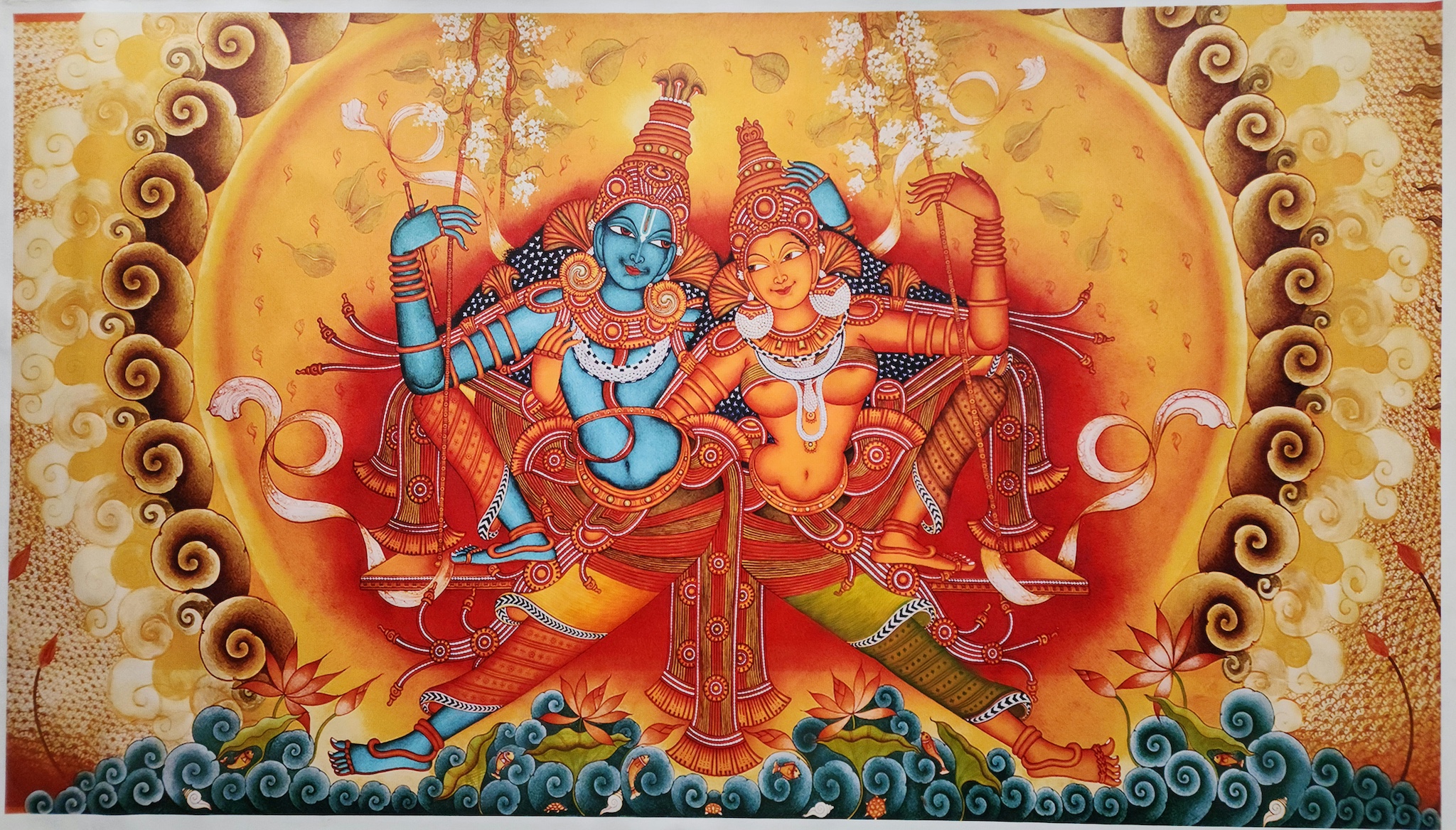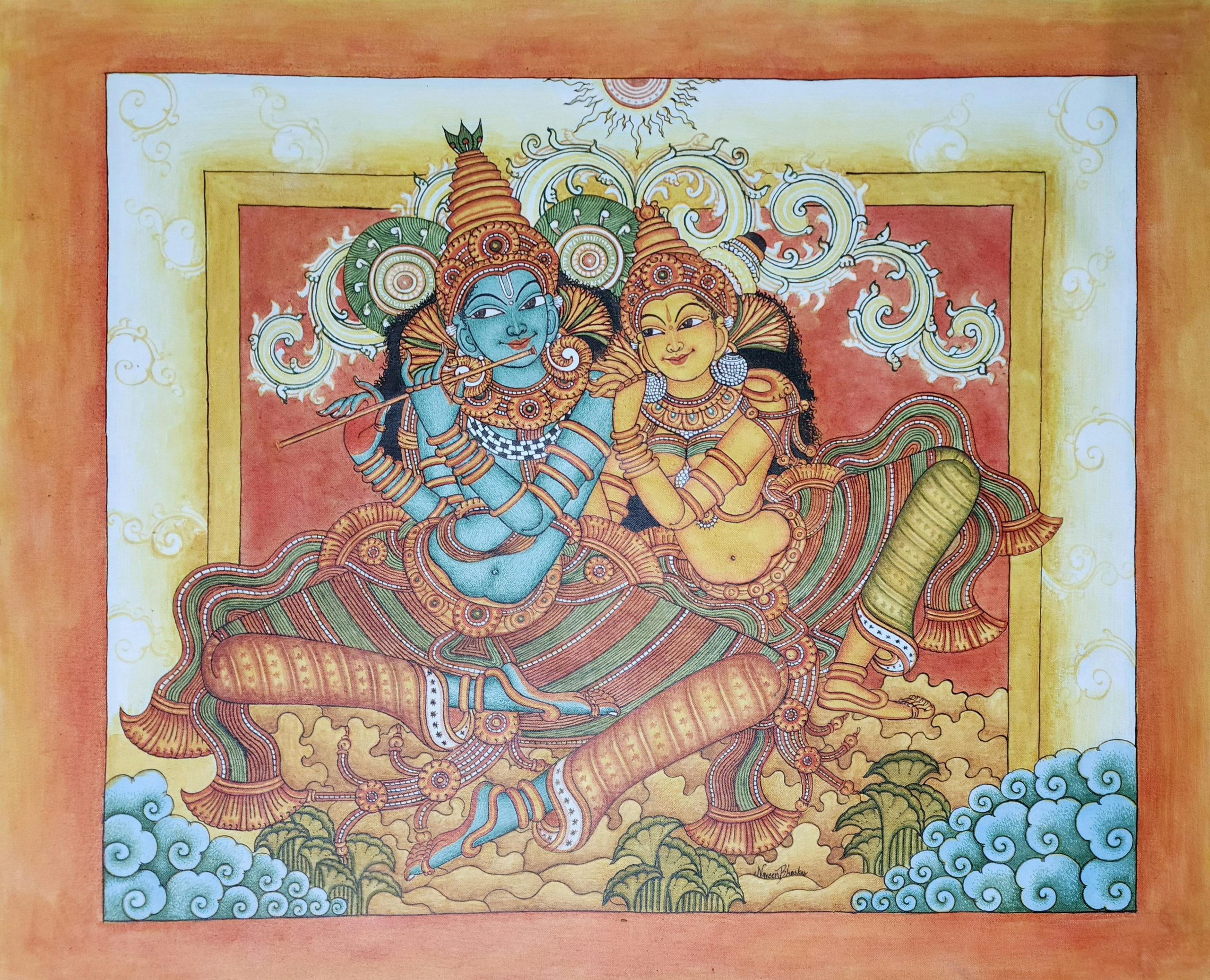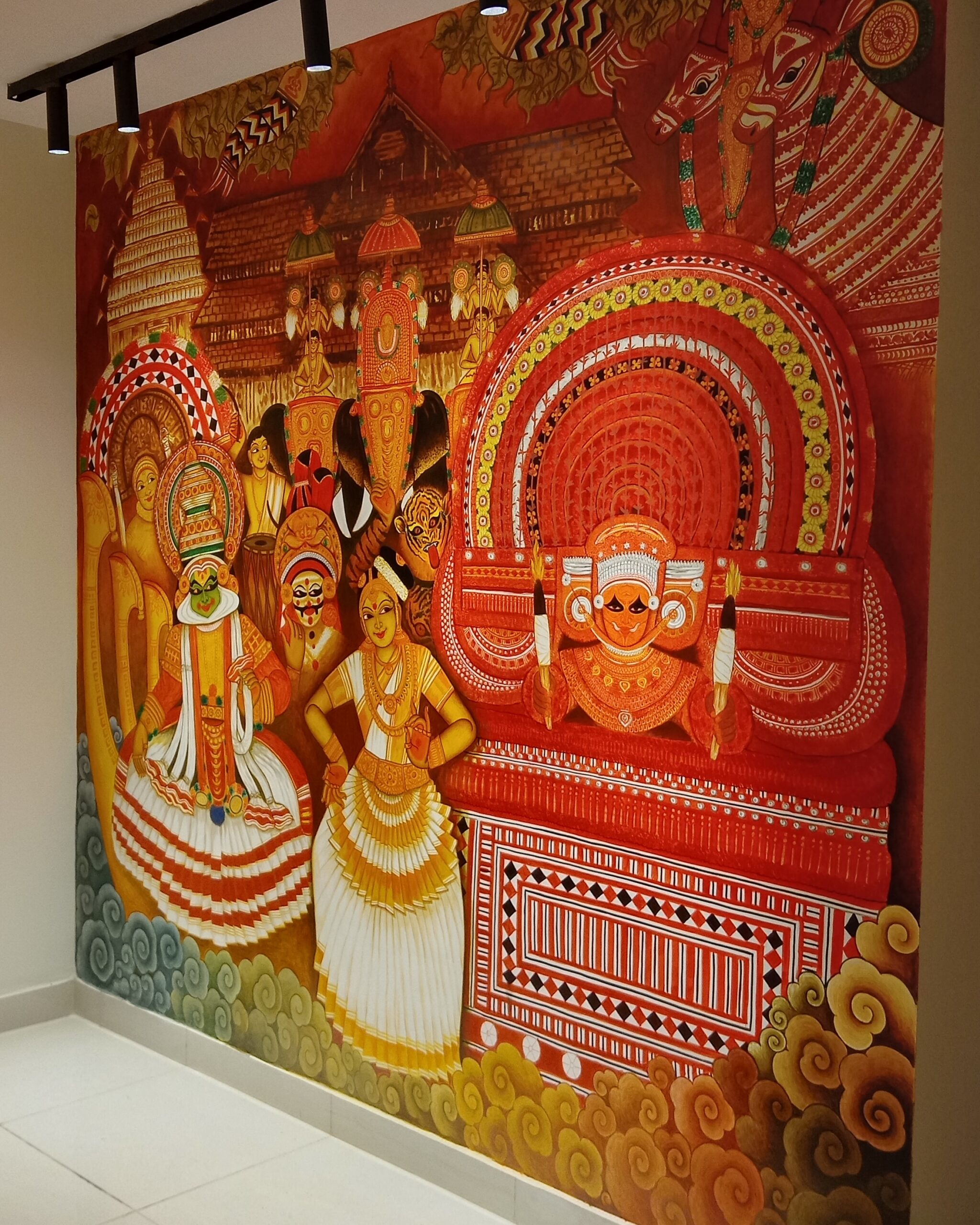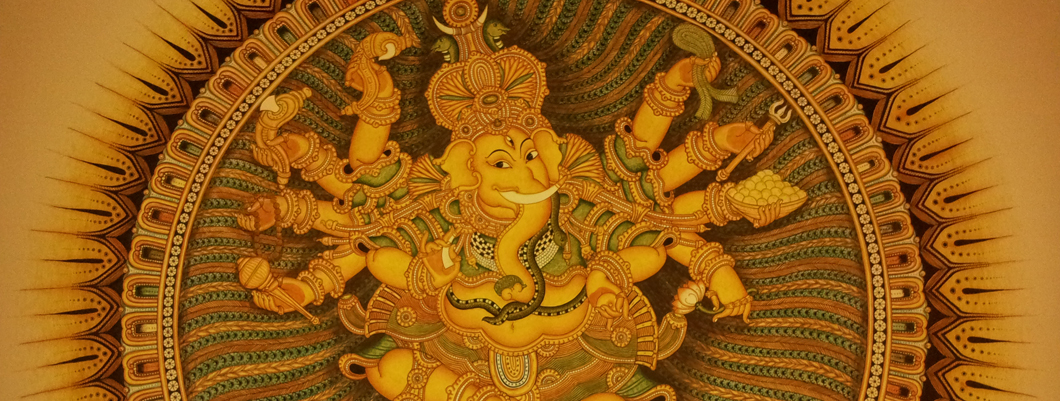
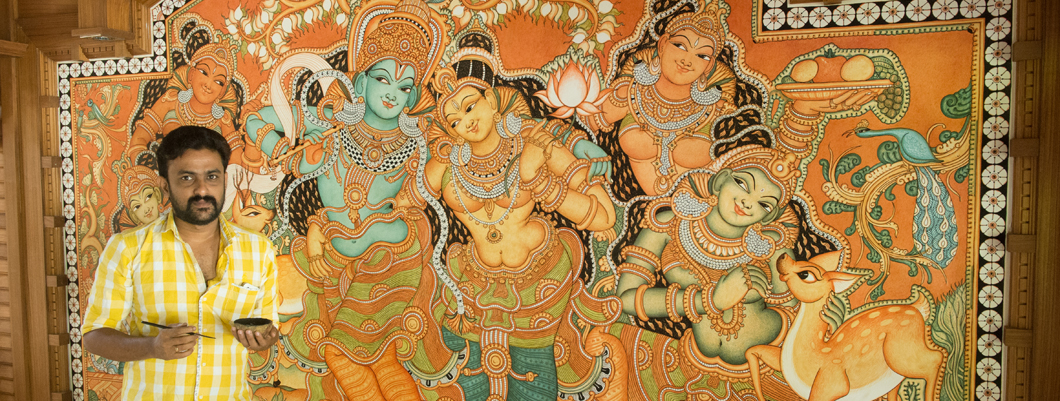

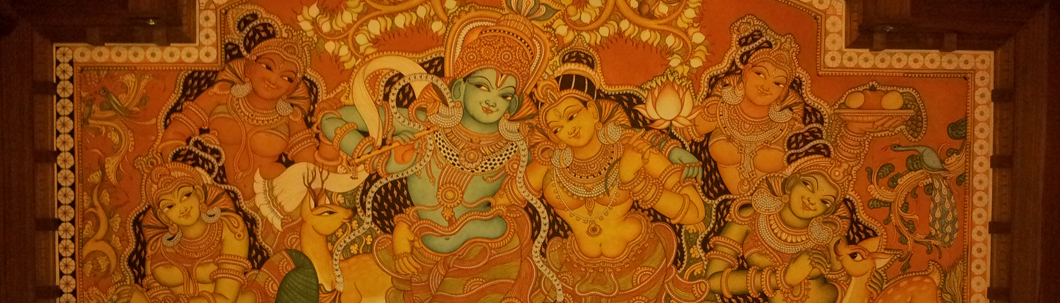
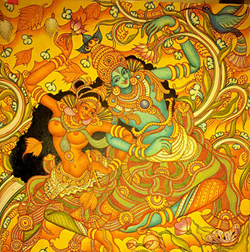
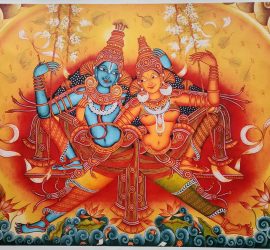
Artwork Title: Radhakrishna Swinging in Vrindavan Size: 70 inches (W) × 40 inches (H)Premium Canvas PrintArt Style: Traditional Kerala Mural Painting Rich natural colors, intricate lines, and divine expressions — all reflecting the spiritual essence of Radha and Krishna. Description: Step into the mystical gardens of Vrindavan, where Lord Krishna and Radha swing together in an eternal moment of divine love. This painting captures the sacred union, joy, and rhythm […]
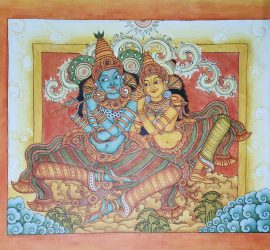
On the auspicious occasion of Krishna Janmashtami, a small offering from Naveen..

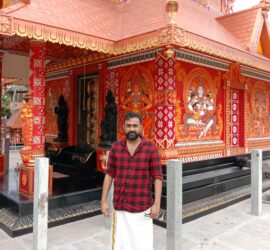
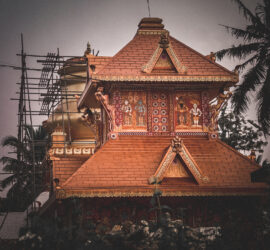
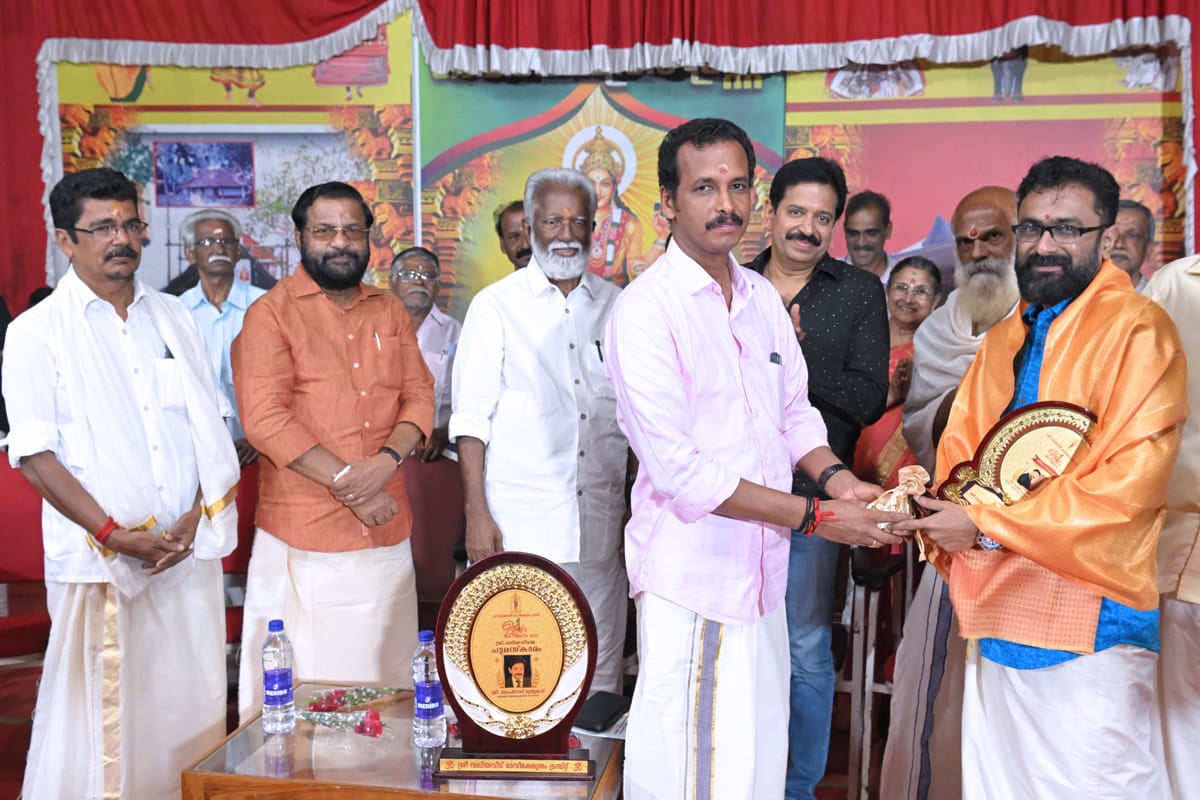
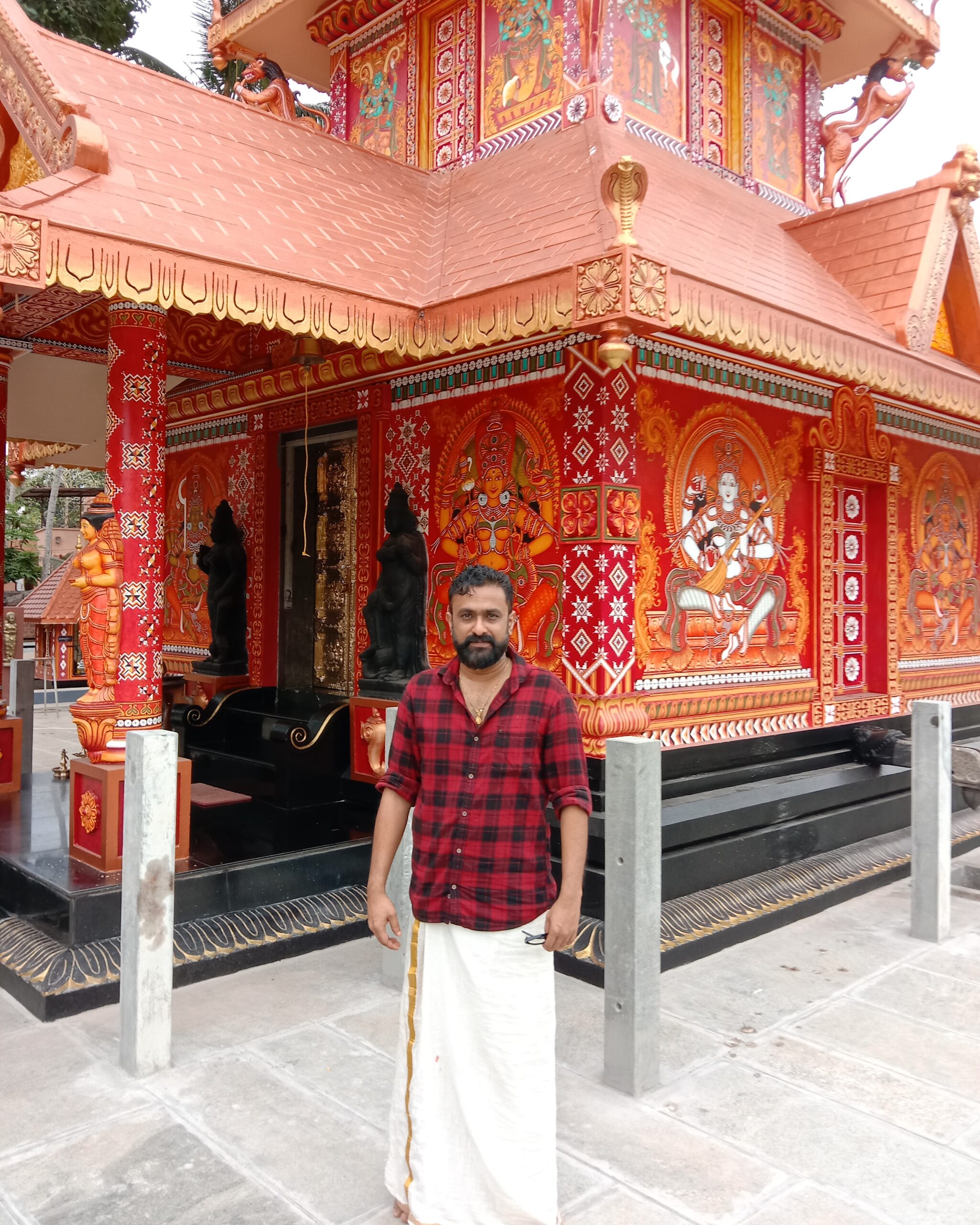
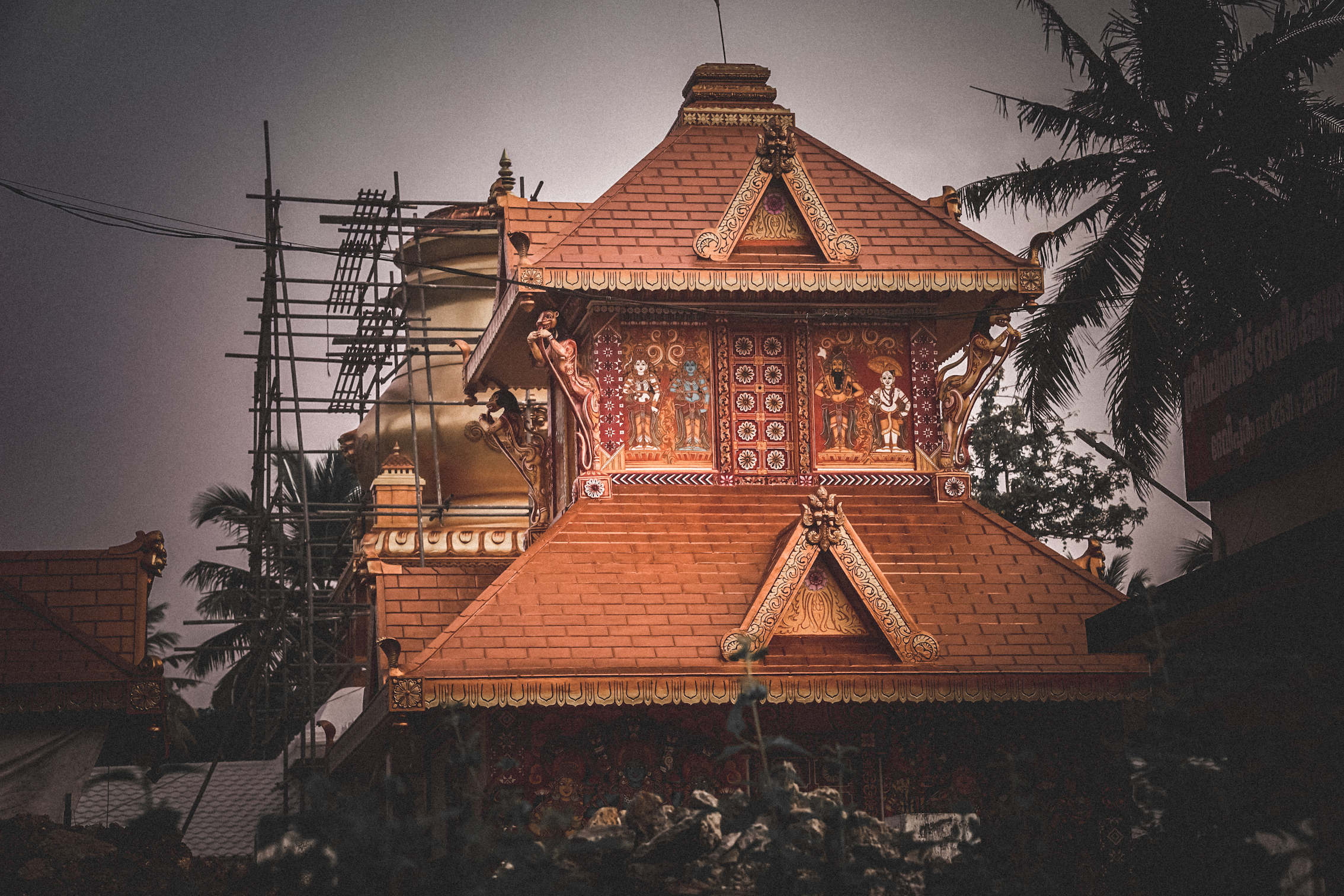
In Naveen’s own words: In a cultural ceremony held on 14/2/2023 on the occasion of the mural painting of Valiyaveedu Devi Temple, Kariyam in Thiruvananthapuram, Temple Tantri Arayaakkeezillam Brahmashree Keshavan Namboothiri, Shri Kummanam Rajasekaran, Shri Kadakampally Surendran, Mr. Gopinath Muthukad, Mr. Rajesh Jyotirgamaya, and other distinguished personsparticipated. On the occasion, I received from them a ponnaada, a shield and a golden ring. I share my happiness and love with all…
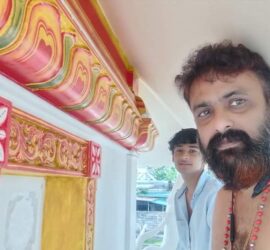
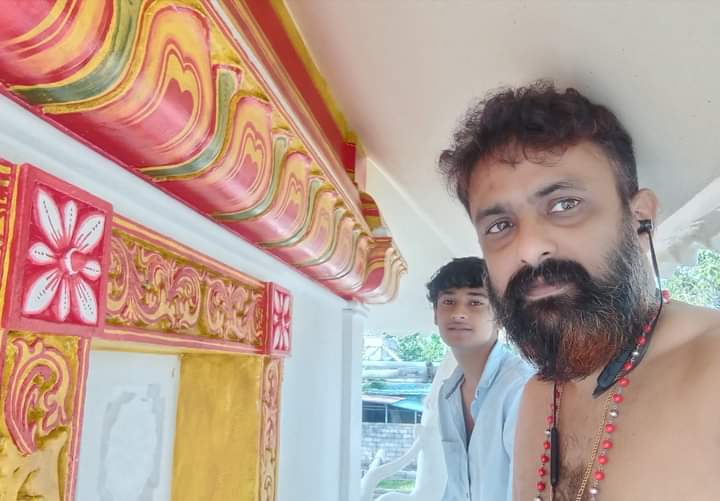
Young Abhinav, who helped his father on the Valiyaveedu Bhagavathy Temple mural painting project received an appreciation from Shri Rajesh (the project sponsor) – a gold chain was presented to Abhinav by the eminent film director Rajasenan. Here’s wishing you more and bigger accomplishments Abhinav.